




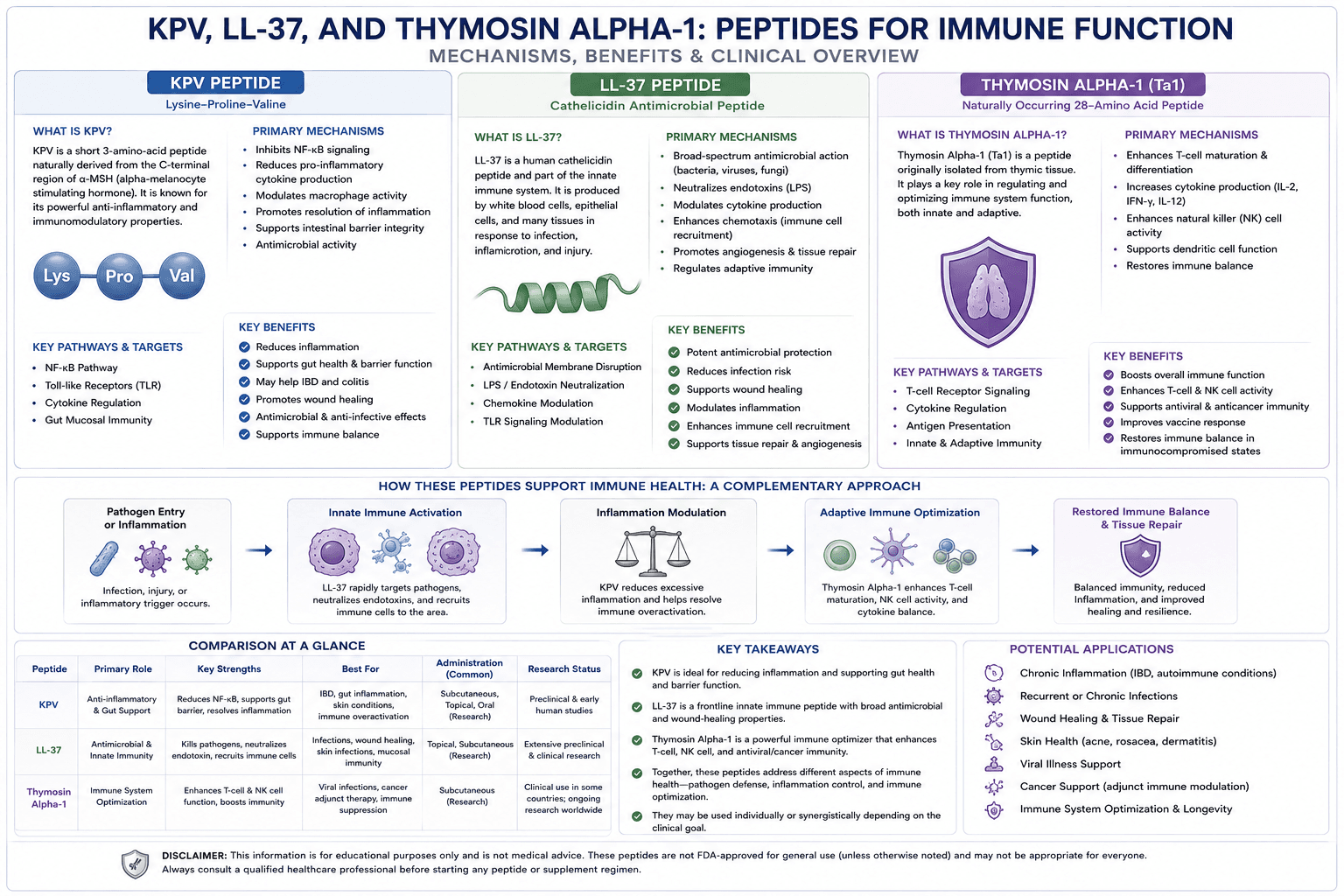
KPV vs LL-37 vs Thymosin Alpha-1: Understanding These Immune-Supporting Peptides
The immune system is one of the most complex biological networks in the human body. Effective immune function requires more than simply fighting infections — a healthy immune response must also regulate inflammation, support tissue repair, maintain barrier integrity, and coordinate communication between immune cells.
Three peptides that have attracted increasing attention in immune medicine are KPV, LL-37, and Thymosin Alpha-1 (Ta1). Although they are often grouped together, they perform very different functions:
- KPV primarily helps regulate inflammation
- LL-37 serves as an important antimicrobial defense peptide
- Thymosin Alpha-1 helps coordinate and optimize immune system function
Understanding these differences can help explain why each peptide is being studied for unique clinical applications.
Understanding the Immune System
The immune system consists of two major branches.
Innate immunity provides immediate, non-specific protection against pathogens. Components include neutrophils, macrophages, natural killer cells, antimicrobial peptides, and physical barriers such as skin and mucosal surfaces.
Adaptive immunity develops targeted responses against specific threats. Components include T cells, B cells, antibodies, and long-term immune memory.
KPV, LL-37, and Thymosin Alpha-1 each influence different parts of this system.
What Is KPV?
KPV is a small three-amino-acid peptide consisting of lysine, proline, and valine. It is derived from alpha-melanocyte-stimulating hormone (α-MSH), a naturally occurring hormone involved in inflammation regulation.
Despite its small size, KPV has demonstrated significant anti-inflammatory activity in laboratory and preclinical studies.
How KPV Works
KPV is primarily known for its ability to help regulate excessive inflammation.
Proposed mechanisms of KPV:
- Inhibits NF-kB signaling
- Reduces inflammatory cytokine production
- Modulates macrophage activity
- Promotes resolution of inflammation
- Supports mucosal barrier integrity
Why NF-kB matters: NF-kB is one of the body's major inflammatory signaling pathways. When excessively activated, NF-kB contributes to chronic inflammation, autoimmune activity, tissue damage, and gut inflammation. By helping regulate this pathway, KPV may support a healthier inflammatory response.
KPV and Gut Health
One of the most discussed applications of KPV is gastrointestinal health. Research has investigated KPV in models of inflammatory bowel disease (IBD), colitis, intestinal inflammation, and mucosal barrier dysfunction.
Because excessive inflammation often damages the intestinal lining, KPV's anti-inflammatory properties have generated significant interest in gut-health research.
What Is LL-37?
LL-37 is the only human cathelicidin antimicrobial peptide. It is naturally produced by white blood cells, epithelial cells, skin tissue, respiratory tissue, and gastrointestinal tissue.
LL-37 plays an important role in innate immune defense. Unlike KPV — which primarily reduces inflammation — LL-37 directly participates in antimicrobial protection.
How LL-37 Works
LL-37 helps defend the body against pathogens while also coordinating immune responses.
Proposed mechanisms of LL-37:
- Disrupts microbial membranes
- Neutralizes bacterial endotoxins
- Recruits immune cells
- Enhances chemotaxis
- Modulates inflammatory signaling
- Supports wound healing
- Promotes angiogenesis
Antimicrobial activity: LL-37 has demonstrated activity against bacteria, viruses, and fungi. This broad-spectrum activity is one reason LL-37 is considered an important component of the innate immune system.
LL-37 and Tissue Repair
Beyond antimicrobial defense, LL-37 may support wound healing, angiogenesis, tissue regeneration, and epithelial repair. This dual role in both host defense and tissue repair makes LL-37 unique among immune peptides.
What Is Thymosin Alpha-1?
Thymosin Alpha-1 (Ta1) is a naturally occurring 28-amino-acid peptide originally isolated from the thymus gland. The thymus is responsible for developing and educating T cells, which are critical components of adaptive immunity.
Thymosin Alpha-1 is best understood as an immune-modulating peptide rather than a direct antimicrobial agent.
How Thymosin Alpha-1 Works
Thymosin Alpha-1 appears to enhance communication and coordination throughout the immune system.
Proposed mechanisms of Thymosin Alpha-1:
- Supports T-cell maturation
- Improves antigen presentation
- Enhances dendritic cell activity
- Increases natural killer (NK) cell function
- Modulates cytokine production
- Supports immune surveillance
- Improves immune balance
Why T cells matter: T cells help coordinate adaptive immunity by identifying infected cells, eliminating abnormal cells, supporting antibody production, and developing long-term immune memory. This makes Thymosin Alpha-1 particularly interesting in immune-compromised states and infectious disease research.
Comparing KPV, LL-37, and Thymosin Alpha-1
| Peptide | Primary Role | Main Target | |---|---|---| | KPV | Inflammation control | NF-kB, cytokines, gut immunity | | LL-37 | Antimicrobial defense | Pathogens, innate immunity, wound repair | | Thymosin Alpha-1 | Immune optimization | T cells, NK cells, adaptive immunity |
Can These Peptides Work Together?
Mechanistically, these peptides target different aspects of immune health.
- KPV focuses on reducing excessive inflammation, supporting barrier function, and promoting immune balance
- LL-37 focuses on pathogen defense, antimicrobial protection, and tissue repair
- Thymosin Alpha-1 focuses on T-cell function, immune regulation, and adaptive immunity
Because they influence different pathways, researchers often view these peptides as complementary rather than redundant.
Potential Applications Being Studied
Current research has explored these peptides in relation to:
- KPV — inflammatory bowel disease, gut inflammation, autoimmune conditions, chronic inflammatory disorders
- LL-37 — wound healing, skin conditions, chronic infections, antimicrobial defense
- Thymosin Alpha-1 — viral infections, immune dysfunction, cancer immunology, vaccine response, immune system optimization
Additional clinical research is ongoing.
Are These Peptides FDA Approved?
Regulatory status varies by peptide and indication. Many peptide therapies discussed online are not FDA-approved for general wellness or immune optimization purposes.
Patients should avoid obtaining injectable peptides from unregulated online sources because quality, purity, and safety can vary significantly.
Frequently Asked Questions
What does KPV do?
KPV primarily helps regulate inflammation and may support gut barrier health through modulation of inflammatory signaling pathways.
Is LL-37 an antibiotic?
Not exactly. LL-37 is a naturally occurring antimicrobial peptide produced by the human body that helps defend against bacteria, viruses, and fungi.
What is Thymosin Alpha-1 used for?
Thymosin Alpha-1 is studied for immune regulation, T-cell support, antiviral immunity, and immune optimization.
Which peptide is best for inflammation?
KPV is most strongly associated with inflammation control and immune modulation.
Which peptide is best for immune defense?
LL-37 is most directly associated with innate antimicrobial defense.
Which peptide is best for immune system optimization?
Thymosin Alpha-1 is generally considered the most comprehensive immune-regulating peptide among the three.
Can these peptides be combined?
Because they target different immune pathways, some clinicians and researchers consider them complementary. Treatment decisions should always be individualized and medically supervised.
The Bottom Line
KPV, LL-37, and Thymosin Alpha-1 represent three distinct approaches to immune support.
- KPV focuses on controlling excessive inflammation and supporting barrier health
- LL-37 functions as a frontline antimicrobial defense peptide while also promoting tissue repair
- Thymosin Alpha-1 helps optimize adaptive immunity through effects on T cells, natural killer cells, and immune communication
Together, these peptides illustrate how modern peptide research is exploring multiple strategies to support immune resilience, recovery, and overall health.
Related reading:
- CJC-1295 vs Ipamorelin vs Sermorelin vs IGF-1 LR3 — the GH/IGF-1 axis explained
- BPC-157 vs GHK-Cu vs TB-500 — tissue repair peptide mechanisms
- Epitalon vs Kisspeptin-10 vs NAD+ — longevity pathways explained
- AOD-9604 vs MOTS-c vs Tesamorelin vs Semaglutide vs Tirzepatide — weight loss & metabolic peptides
- DSIP Peptide for Sleep — delta sleep, HPA-axis, and recovery
- Peptide Therapy Education — 23 active compounds
Chronic Inflammation, Recurrent Infections, or an Immune System That Isn't Performing?
When the immune system runs hot — chronic inflammation, gut issues, autoimmune flares — or runs flat — recurrent infections, slow healing, post-viral fatigue — the right next step usually isn't a generic supplement stack. It's a real workup and a treatment plan built around your specific picture.
Dr. Rubin sees patients at our Garden City and New Hyde Park offices and serves the greater Nassau County and Queens area. Call 516-492-3100 or text 516-206-0774 to schedule a consultation, or complete the peptide intake form online before your visit to save time in the office.
Medical Disclaimer
This article is for educational purposes only and does not constitute medical advice. Peptide therapies may not be FDA-approved for all uses and may not be appropriate for every patient. Always consult a qualified healthcare professional before beginning any treatment program.
Written by Dr. Edward Rubin, MD — board-certified in Pain Medicine and Anesthesiology, with fellowship training at Cornell, Columbia, Hospital for Special Surgery, and Memorial Sloan Kettering. Dr. Rubin has been treating patients on Long Island for over 20 years.